
📝
Documented, not tribal knowledge
Every network gets a real diagram, IP plan, and device list — like the ones on this page — so it can be handed to someone else and understood in minutes, not reverse-engineered.
Engineered, not guessed
Before anything gets racked or plugged in, it gets designed on paper — every device, every VLAN, every failure point accounted for. Below are the actual reference architectures TCG builds from, broken down piece by piece: what’s in them, why each choice was made, and who they’re for.
Reference design 1
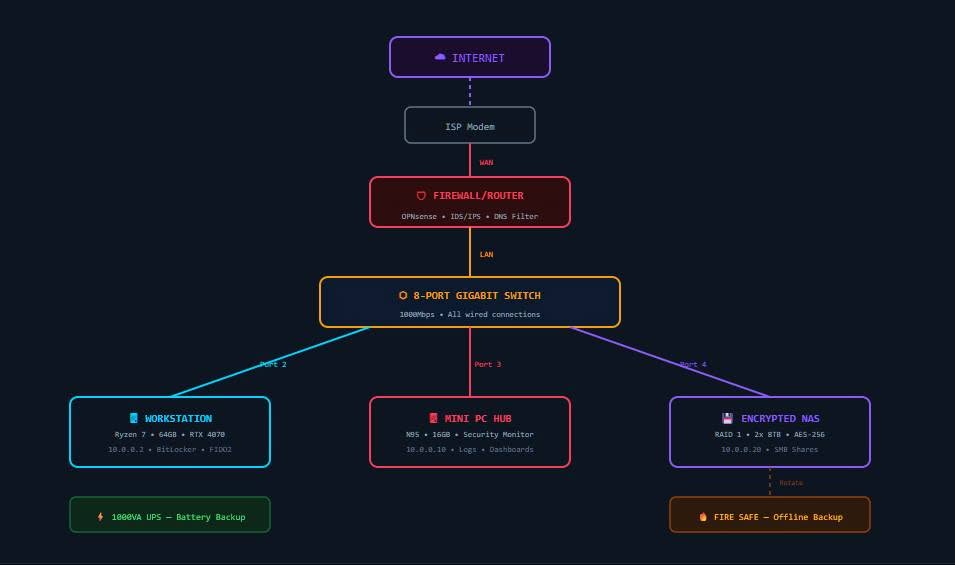
This is the baseline every home or small office should have — and the design most people are missing at least half of. It starts simple and gets more capable at every layer without adding complexity you’d have to babysit.
Who it’s for: households and single-office setups that want real protection without a rack of gear — this fits on a shelf.
Reference design 2
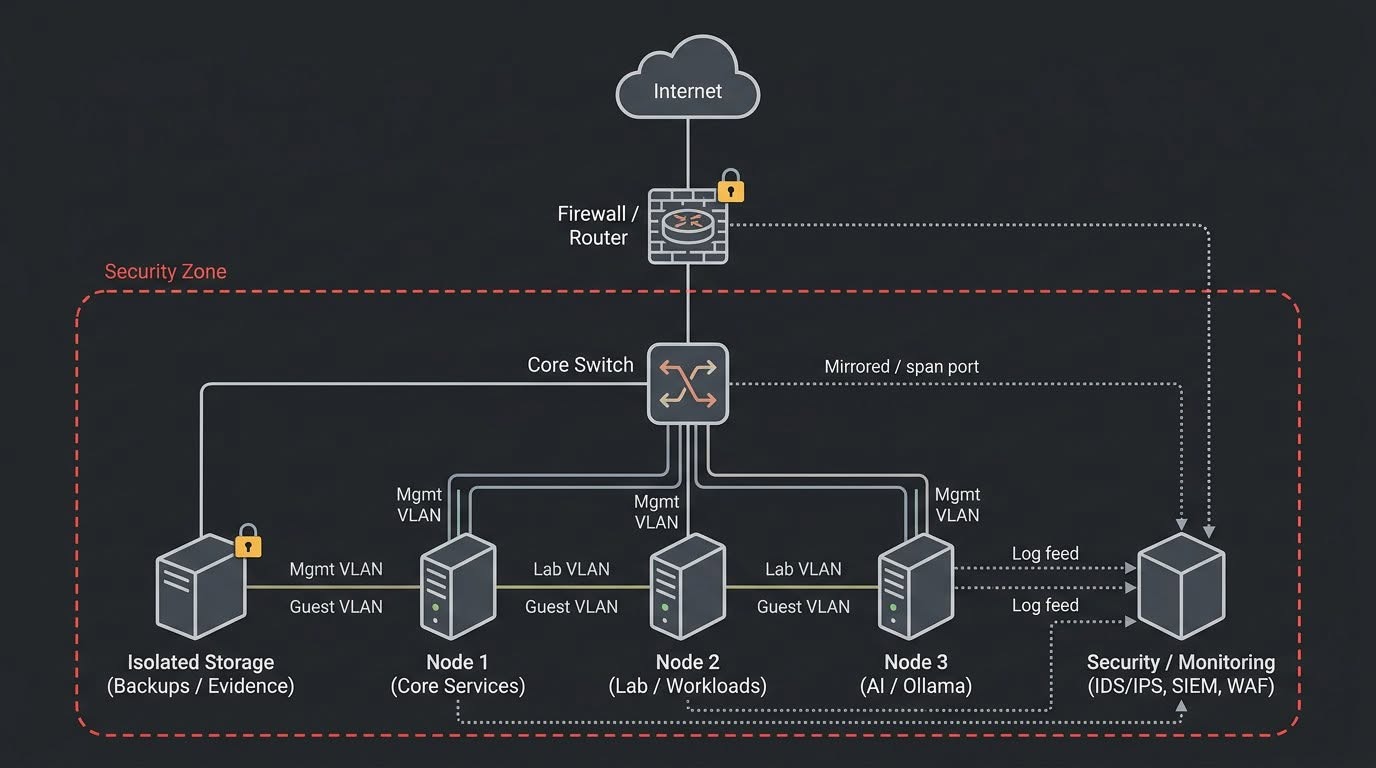
A flat business network is one compromised laptop away from a full breach. This design assumes that eventually, something will get infected or misbehave — and makes sure that when it does, it can’t reach everything else.
Who it’s for: small businesses running more than a handful of devices, anyone touching client data, or anyone running AI/automation workloads alongside day-to-day operations.
Reference design 3
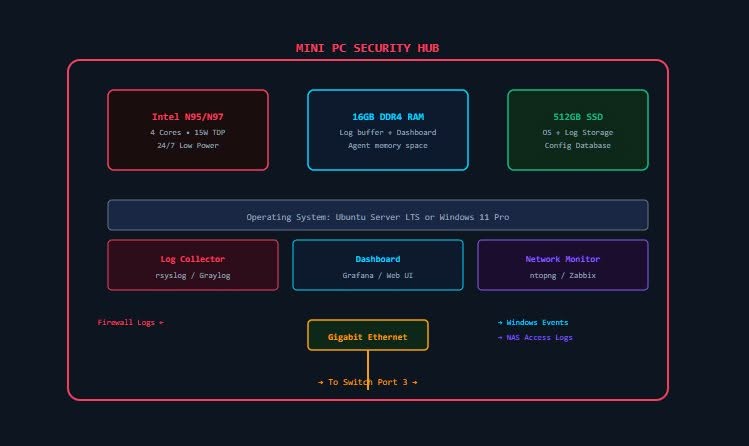
You don’t need a rack or a power bill to match to get real visibility into a network. This is the box both reference designs above lean on for logging and monitoring — sized to run 24/7 for pocket change in electricity.
Who it’s for: anyone from the home-network design up to the full business security zone — it’s the same building block at every scale.
How we work
Every network gets a real diagram, IP plan, and device list — like the ones on this page — so it can be handed to someone else and understood in minutes, not reverse-engineered.
Boring, well-supported hardware and software beat a fragile "clever" setup every time. If it can’t be fixed at 11pm by reading the diagram, it doesn’t ship.
Every design decision — a cheaper switch, a smaller NAS, skipping a UPS — gets explained plainly, including what you’re giving up, so it’s your informed call, not a hidden one.
Every network is different — we’ll design yours around what you actually have and actually need, explained in plain English, with a diagram like the ones above when we’re done.